
The Honest Pros and Cons of Living in Orlando in 2026

The Honest Pros and Cons of Living in Orlando in 2026
The pros and cons of living in Orlando are not what most relocation blogs make them out to be. I've had a version of this conversation with dozens of out-of-state buyers over the last few years, and the picture people show up with before closing is almost never the picture they have a month after.
This post covers what's actually working in Orlando in 2026, what the real tradeoffs are, what it costs to live here right now, and which areas work for which kinds of buyers. I'll also get into the insurance question, because that's the part most relocation posts either skip or get wrong.
A quick note on me. I'm Tyler Gibson, and I lead the GPG Team at LPT Realty in Orlando. I've worked, lived, and invested across Central Florida for years, including Orange, Seminole, Lake, and Polk counties. The numbers and neighborhood notes here come from on-the-ground experience, not a press release.
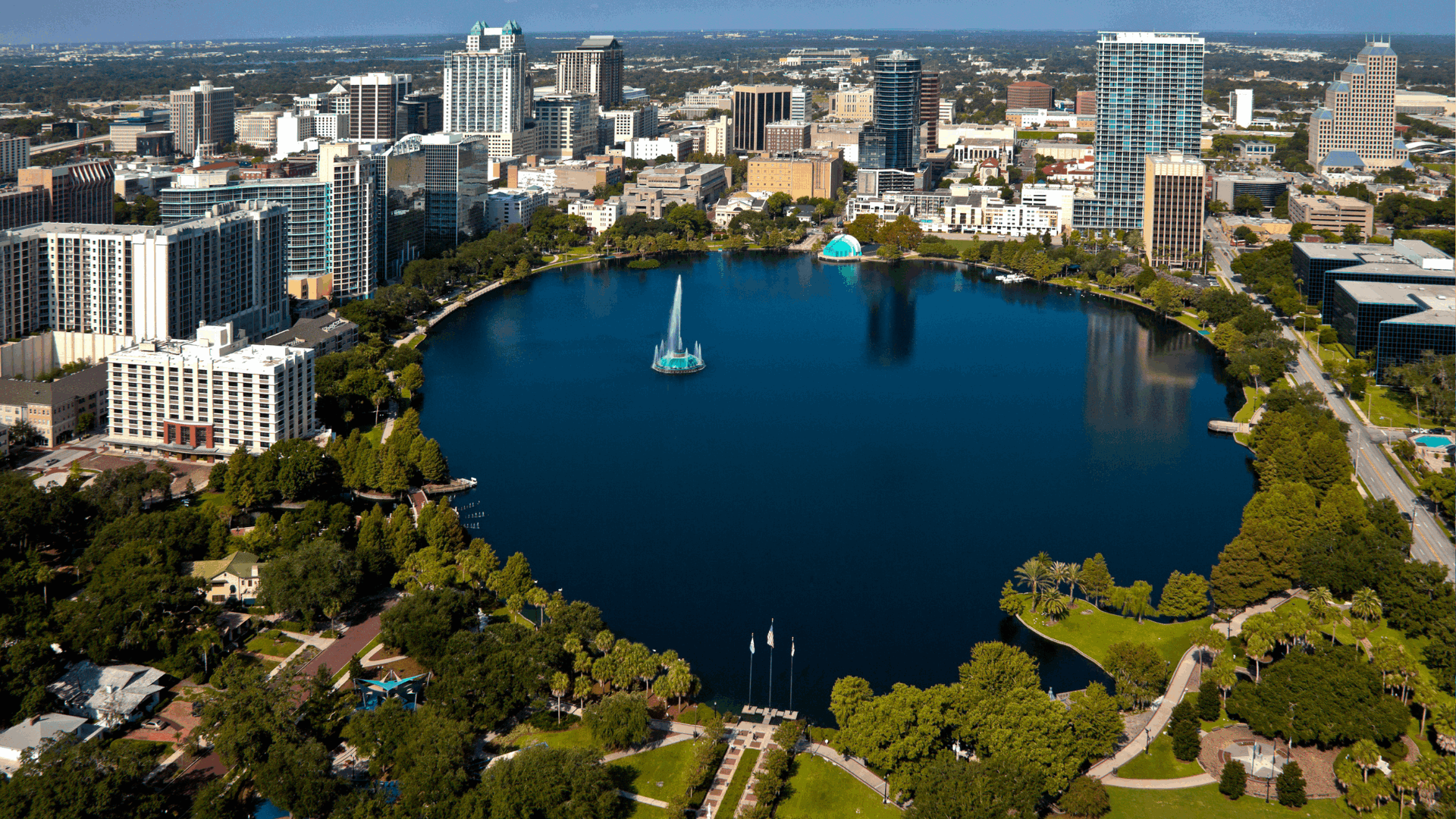
Is Orlando a good place to live in 2026?
Yes, Orlando is a good place to live in 2026 for most people moving from out of state, but the answer depends on which Orlando you mean and what you're moving for. The City Beautiful itself has about 320,000 residents, but the metro area, which is what people actually mean when they say Orlando, has just under three million people spread across Orange, Seminole, Osceola, and Lake counties.
That distinction matters more than people realize. Downtown Orlando, Winter Park, and Lake Nona feel like completely different places than Clermont or St. Cloud. So when somebody tells you Orlando is a great place to live, ask them which part.
For most relocating buyers, the metro works because it offers something rare right now: real population and job growth without the price tag of Miami or the coastal insurance bills of Tampa. The Orlando Economic Partnership reported in 2025 that the region led all top 30 U.S. metros in job growth, population growth, and GDP growth, and the latest Census data showed the area added about 76,000 residents in 2024, or roughly 1,500 per week.
That growth is what makes the market work. It's also what makes the traffic worse. Both are true.
The biggest pros of living in Orlando
The pros that actually matter come down to weather most of the year, no state income tax, real job growth, and a cost of living that's still below most major Sun Belt metros.
The weather is the obvious one. From October to May, Central Florida is genuinely pleasant. Sunny, mild, and the kind of climate that makes outdoor living year-round realistic. I won't pretend the summer is fun, but nine months out of twelve, you're in good shape.
No state income tax is the financial pro most people understand at a high level but underestimate in practice. If you're coming from New York, New Jersey, California, or Illinois, the take-home difference is real money. Most of my out-of-state clients see a 4 to 9 percent bump in net income just from the tax move, depending on what they made before. I'd still tell you to verify the math with your CPA, but the move generally pays for itself on the tax line alone.
The job market is where most relocation posts get it half right. They mention tourism and stop there. Orlando added about 37,500 jobs in 2024, with the biggest gains coming from healthcare and tourism, but with growing pockets in tech (ThreatLocker has gotten a lot of attention), financial services (BNY Mellon, Charles Schwab), and aerospace at the Space Coast just east of the metro. It's not Silicon Valley, but it's no longer just theme parks.
Then there's the housing math. The median home price in March 2026 was $385,000, according to the Orlando Regional REALTOR Association. That's substantially below Tampa, dramatically below Miami, and competitive with most Sun Belt alternatives. If you're coming from a high-cost market, your dollar goes further here.
The real downsides of living in Orlando
The honest downsides are insurance costs, the summer heat, traffic, and the wage gap for anyone in a service-economy job.
Insurance is the big one nobody warns out-of-state buyers about until it's too late. Florida has the most expensive homeowners insurance in the country, with the statewide average running close to $11,759 per year according to Bankrate's 2026 data. The good news is Orlando sits well below that number. Orange County averages around $3,200 to $4,500 per year for a standard single-family home, and Insurify's 2026 data puts the average Orlando policy around $4,860. That's still a real line item for a first-time Florida buyer, but it's a fraction of what coastal Miami-Dade or Palm Beach pays. If you want to verify rates for your specific home, the Florida Office of Insurance Regulation's CHOICES tool lets you pull current homeowner rates by ZIP and carrier.
Heat is real from June through September. Daily highs in the mid-90s, humidity that rarely drops below 60 percent, and afternoon thunderstorms that come and go like clockwork. You adapt to it, but the first summer is rough.
Traffic on Interstate 4 is its own problem. Orlando drivers average roughly 95 hours per year in their cars, with about 30 of those in bumper-to-bumper conditions. Tourist season makes it worse. If you can pick a neighborhood close to your job, do it. The difference between a 15-minute commute in Winter Park and a 50-minute commute from Clermont can change how you feel about living here.
The wage gap is the quieter downside. Tourism and hospitality still account for a huge chunk of the local job market, and entry-level service wages don't keep up with the cost of housing. If you're moving for a professional job with a national-scale salary, this won't affect you. If you're moving without a job lined up and assuming you'll figure it out, this is the part to plan for.
How much does it cost to live in Orlando in 2026?
A single person needs roughly $52,000 a year before taxes to live comfortably in Orlando in 2026, and a family of four needs closer to $87,000 to $112,000 depending on lifestyle. The overall cost of living is about 1 percent below the national average, but housing, insurance, and HOA fees have crept up over the last few years.
Here's what real monthly numbers look like right now. A one-bedroom apartment in a reasonable Orlando neighborhood runs $1,500 to $1,900. A three-bedroom rental house in a decent suburb is closer to $2,200 to $3,000. Buying at the metro median of $385,000 with 10 percent down at a 6.2 percent rate gets you a principal and interest payment of about $2,120, plus another $300 to $400 a month for insurance, property taxes between $250 and $400 depending on the county, and HOA fees from $50 to $300 a month in most planned communities.
That's the part to plan for. Add it all up and the same $385,000 home runs closer to $3,000 to $3,200 a month all in. That's why I always tell out-of-state buyers to budget the full carrying cost before falling in love with a list price. Your lender can run actual numbers for the specific home you're looking at, and I'd recommend getting that done before you start shopping.

The Orlando housing market in 2026, in plain English
The Orlando housing market in 2026 is flat to slightly positive, with the median price holding around $385,000 and homes sitting on the market for an average of 77 days, according to the March 2026 ORRA State of the Market report. Redfin's Orlando market data shows similar pricing trends from a different methodology.
In plain terms, this is no longer the market it was in 2021 or 2022. Buyers have time. Inventory is around 12,000 homes and supply is sitting near 5 months, which is right at the edge of a balanced market. Mortgage rates are bouncing around the 6 percent range, and Freddie Mac had the 30-year average dipping to 6.30 percent in mid-April 2026.
What that means for relocating buyers: you have negotiating room you didn't have a few years ago. Seller-paid closing costs are back. Price reductions are happening, particularly in the southern and outer parts of the metro like Davenport, South Kissimmee, and parts of Osceola County. The strongest, tightest submarkets are still Winter Park, Windermere, Dr. Phillips, College Park, and Lake Nona, and those areas have not seen the same softening.
For investors, the underlying math still works in pockets, but rental yields have compressed and new construction in the outer suburbs makes it harder to cash flow in the first three years. That's not a doomsday call. It's just the current reality. If you want a more detailed monthly read, I keep that in my latest Orlando market update.
Which Orlando areas should newcomers actually consider?
The Orlando areas that work best for newcomers depend on whether you prioritize commute, schools, or price.
If schools and walkability are at the top of your list, Winter Park, Baldwin Park, College Park, and Maitland are the established picks. Prices in these areas run from the upper $400,000s to well over a million for single-family homes, but the school zones and the lifestyle hold their value through any market cycle. I've written more on the best neighborhoods in Orlando for families if you want the full breakdown by school zone and price point.
If you want newer construction and you're okay with a suburban commute, Lake Nona, Winter Garden, Horizon West, and Oviedo are the corridors to look at. These are master-planned communities with strong schools, but you'll pay HOA fees and you'll spend more time in your car.
If price point is the priority and you're open to commuting, Clermont and the southern Lake County area work well, and so does St. Cloud in Osceola County. You can find solid 3-bedroom homes in the high $300,000s to low $400,000s in these areas. Just make sure to actually drive the commute at rush hour before signing anything. Disney-area traffic between 8:00 a.m. and 11:00 a.m. is a real factor. If you're leaning toward Lake County specifically, I put together a Lake County relocation guide that goes deeper on the area.
Investors should look harder at Lake and Polk counties. I've spent a lot of time in both, and the population growth in Polk in particular has been notable over the last four years. Just don't expect new construction to cash flow in year one.
Orlando vs. Tampa vs. Miami, side by side
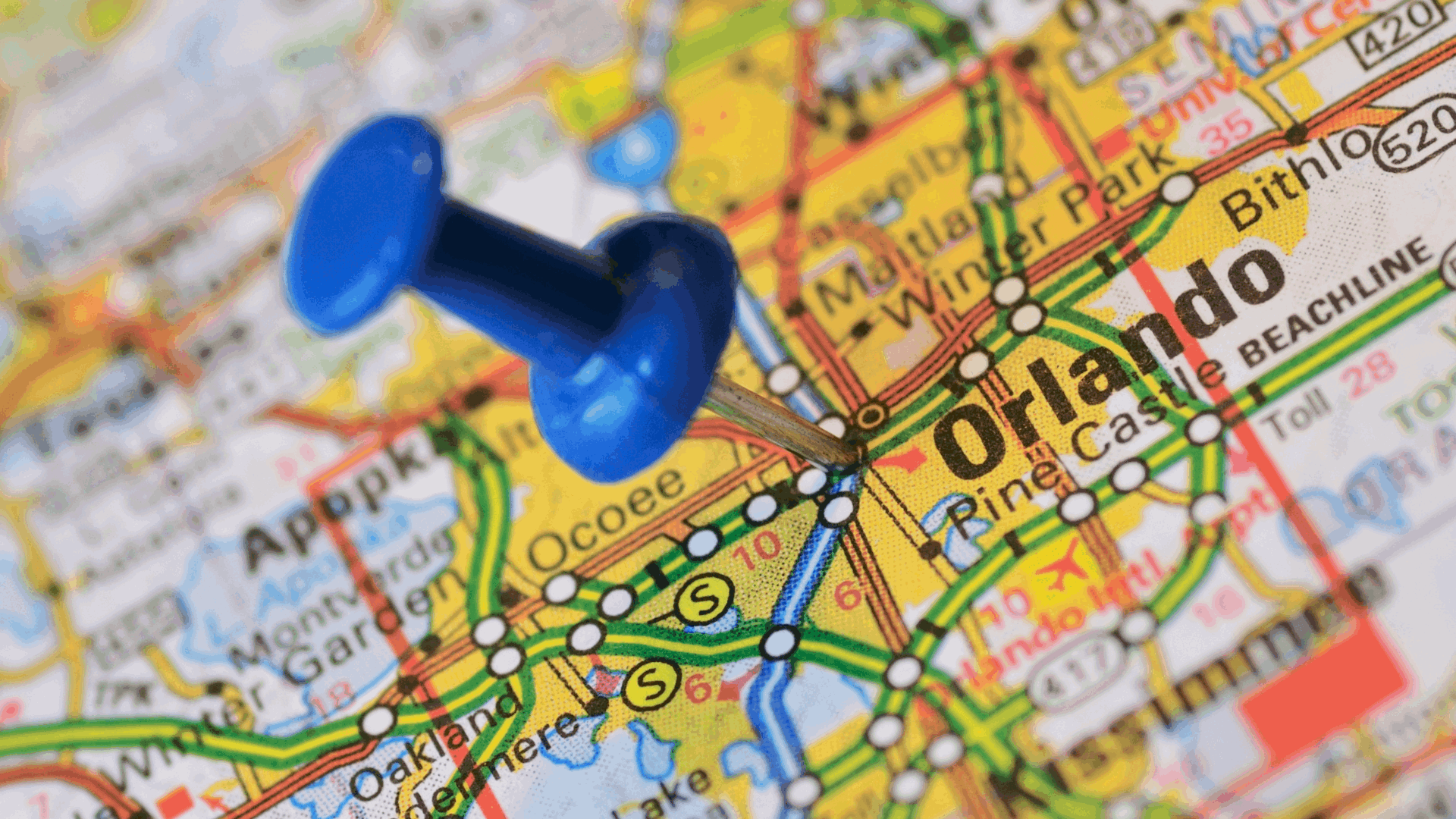
Orlando is the most affordable of Florida's three biggest metros, but it's the most inland and the most tourism-dependent. Tampa is denser, closer to beaches, and has a slightly stronger tech and finance corridor. Miami is the most expensive, the most international, and carries the highest insurance and storm risk.
On housing, the gap is meaningful. Orlando sits around $385,000. Tampa is closer to $410,000 to $420,000 depending on the month. Miami's median runs well above $560,000.
On insurance, Orlando is the clear winner. A standard policy in Orange County runs around $3,200 to $4,500. Tampa Bay runs $4,000 to $5,800. Miami-Dade can hit $5,300 to $7,500 for the same coverage on the same kind of home.
On jobs, all three are growing, but Orlando just took the top spot for job growth among major U.S. metros in 2024. Tampa is right behind. Miami is more finance and international-business heavy.
The honest summary: Orlando wins on cost and growth math. Tampa wins on coastal access. Miami wins on global culture and salary ceilings in certain industries. Pick based on what you actually value, not on which beach photos look better.
So, is Orlando worth the move?
Orlando is worth the move for most relocating buyers, but only if you go in with realistic expectations and pay attention to the parts of the market that don't show up in vacation brochures.
The growth is real. The tax math is real. The cost-of-housing advantage versus Miami and most other Sun Belt metros is real. Insurance is manageable here in a way it isn't in coastal Florida. And the job market has actually diversified beyond tourism, which is what makes me bullish on the next decade.
The parts to plan for are the summer heat, the I-4 commute, the insurance line item that most out-of-state buyers underestimate by half, and the fact that the metro is large enough that the wrong neighborhood choice can sour your whole experience here. Visit in August before you decide. Drive the commute at rush hour. Pull an insurance quote on the specific house you want, not a hypothetical one.
That's the honest version of it. If you want a more detailed breakdown by neighborhood, school zone, and price point, my team put together a free Orlando relocation guide that goes deeper than I can fit in a blog post. You can also search homes for sale in Orlando on our site if you want to start browsing. And when you're ready to talk to a local who actually lives, works, and invests here, you know where to find me.
Frequently asked questions
What salary do you need to live comfortably in Orlando in 2026?
A single person needs roughly $52,000 a year before taxes to live comfortably in Orlando in 2026, and a family of four needs $87,000 to $112,000 depending on lifestyle. The overall cost of living is about 1 percent below the national average, but housing is the line item that pushes total costs higher than people expect. Most renters spend close to 30 to 40 percent of gross income on housing in the current market, so plan your budget accordingly.
How bad are hurricanes in Orlando compared to coastal Florida?
Hurricanes affect Orlando, but the impact is much lower than in coastal Florida. Orlando sits about 50 miles inland, so the metro doesn't see direct storm surge or coastal flooding. When major hurricanes hit Florida, Orlando typically gets high winds, heavy rain, and the occasional inland flooding event, but not the catastrophic damage that hits Miami-Dade, Tampa Bay, or the Panhandle. That inland location is also why Orlando homeowners insurance runs roughly half of what coastal markets charge.
Is Orlando more affordable than Tampa or Miami?
Yes, Orlando is more affordable than both Tampa and Miami in 2026. Orlando's median home price is around $385,000, compared to about $410,000 to $420,000 in Tampa and over $560,000 in Miami. Insurance is also dramatically cheaper in Orlando because of its inland location. The overall cost of living in Orlando runs about 11 percent below Miami and is competitive with the average for major Florida metros.
What is the safest area of Orlando to live in?
Safe areas in the Orlando metro include Winter Park, Baldwin Park, Lake Nona, Windermere, Oviedo, Lake Mary, Winter Garden, and parts of College Park. These areas consistently rank well on local crime metrics and have strong school zones. Safety varies block by block more than ZIP code by ZIP code, so always pull recent crime data for the specific neighborhood you're considering. I recommend visiting a few times at different hours before committing to anything.
Is now a good time to buy a house in Orlando?
Now is a reasonable time to buy a house in Orlando for buyers with a long time horizon, particularly compared to the last few years. Prices have flattened or pulled back slightly from their early 2024 peak, inventory is higher than it's been in years, and sellers are willing to negotiate on price and closing costs. Mortgage rates in the low-to-mid 6 percent range are not exciting, but they're well off the highs. If rates drop further, expect demand to pick up quickly and any current buyer-friendly conditions to compress. I'm not a financial advisor or attorney, so verify the tax, insurance, and legal specifics with the appropriate professional before deciding.
Categories
Recent Posts










“Making real estate simple, fun and profitable! ”