
House Hacking in Orlando: How Buyers Can Offset Housing Costs and Build Wealth

For a lot of buyers, the biggest obstacle to building wealth through real estate is getting past the cost of the first property.
The mortgage is one thing. Then you add property taxes, homeowners insurance, maintenance, utilities, and everything else that comes with owning a home in Florida.
That is why house hacking continues to get attention.
Instead of buying a home and carrying the entire monthly housing expense yourself, you buy a property that gives you a way to generate rental income while you live there.
That could mean purchasing a duplex and living on one side. It could mean buying a home with a legal accessory dwelling unit. In some situations, it could even mean renting part of your primary residence for shorter stays.
I’m Tyler Gibson with the GPG Team, and I like the concept of house hacking because it can turn your housing expense into part of an investment strategy.
But the property, financing, zoning, rental rules, and numbers still have to work.
What Is House Hacking?
House hacking simply means using part of your primary residence to generate income that helps offset the cost of owning the property.
You might live in one unit of a duplex and rent the other. You might own a single-family home with a permitted garage apartment. Or you may rent a portion of your home while continuing to occupy the property yourself.
The goal does not have to be living completely mortgage-free.
If rental income reduces a $3,000 monthly housing expense to $1,800, that can still create a meaningful difference in someone's monthly cash flow.
That money could go toward reserves, paying down debt, investing elsewhere, or eventually buying another property.
What makes house hacking especially interesting is that you are buying a primary residence, not necessarily starting with a traditional non-owner-occupied investment property.
For example, HUD states that FHA financing can be available on one- to four-unit properties, with eligible borrowers potentially putting as little as 3.5 percent down. HUD FHA loan information
That does not mean every buyer or every property qualifies for the same financing. But it shows why owner-occupied small multifamily properties can be an important entry point for newer investors.
Strategy #1: Buy a Duplex, Triplex, or Fourplex
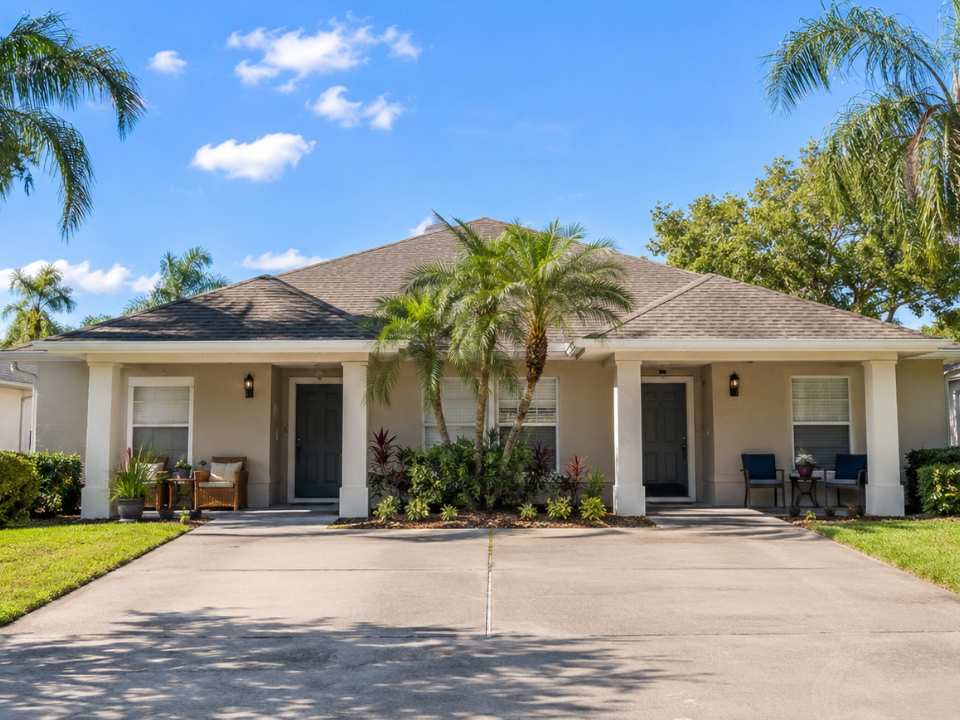
This is probably the most recognizable version of house hacking.
You purchase a two-, three-, or four-unit property, occupy one of the units as your primary residence, and rent the others.
Instead of your paycheck carrying the entire mortgage payment, the other units generate income that helps support the property.
Consider a simplified example.
Suppose the total monthly principal, interest, taxes, and insurance payment is $3,800.
You live in one unit of a triplex and the other two units each rent for $1,400.
That gives you $2,800 in gross monthly rent before vacancy, repairs, management, utilities, maintenance, and other expenses.
Your housing cost has potentially been reduced substantially, but I would not call that $2,800 pure profit.
That distinction matters.
House hacking works best when you underwrite it the same way you would any other investment. Assume things will break. Allow for vacancy. Understand what utilities you will pay. Know what rents are actually achievable.
The financing side can also be attractive. Fannie Mae's current Selling Guide recognizes rental income from two- to four-unit principal residences as a potential qualifying income source, subject to its documentation and underwriting requirements. Its calculation rules can use 75 percent of documented gross rent in certain situations rather than simply counting every projected rental dollar. Fannie Mae Selling Guide
That is why I would involve a lender early. How rental income is treated depends on the loan, property, borrower history, documentation, and underwriting.
Do not build your purchase price around a financing assumption you have not verified.
Strategy #2: Buy a Home With an ADU or ADU Potential
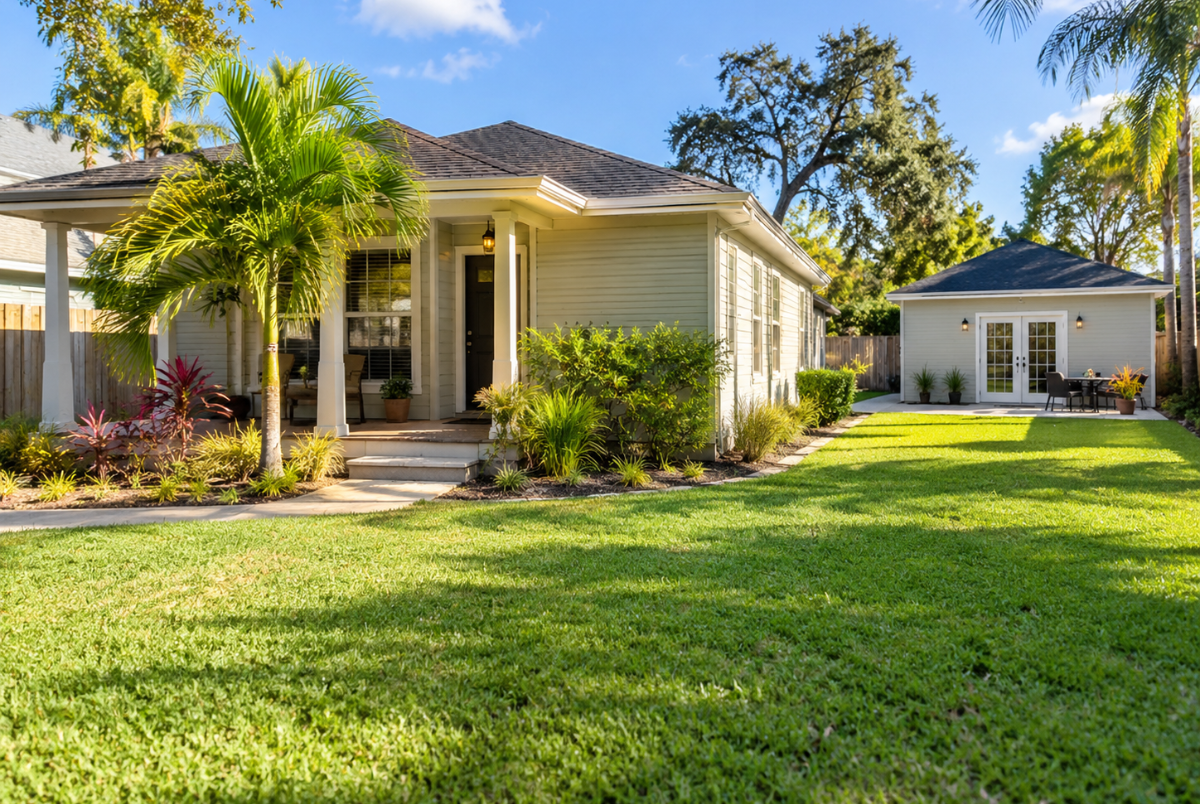
An accessory dwelling unit, commonly called an ADU, can create another version of house hacking without requiring a traditional duplex.
Think of a detached garage apartment, backyard cottage, or another independent living area with its own sleeping, bathroom, and kitchen facilities.
For the right buyer, this can offer something a duplex sometimes cannot: more separation.
You may live in the main house while the tenant has a separate entrance and living area.
But I would be careful with the phrase “ADU potential.”
A big backyard does not automatically mean you can build another dwelling.
Inside the City of Orlando, ADU eligibility depends on factors including the property's zoning, lot characteristics, development standards, and proposed unit size. The city provides a step-by-step process specifically for homeowners evaluating whether an ADU can be added. City of Orlando ADU Guide
This is an area where buyers can get themselves into trouble.
They see a detached garage and think, “I can convert that into an apartment.”
Maybe.
But I want to know whether zoning allows the use, whether the structure can legally be converted, what permits are required, whether utilities need to be upgraded, and what the project will actually cost.
There is a big difference between buying an existing legal ADU and buying a property where you hope to create one later.
Strategy #3: Rent Part of Your Home Short-Term or Mid-Term
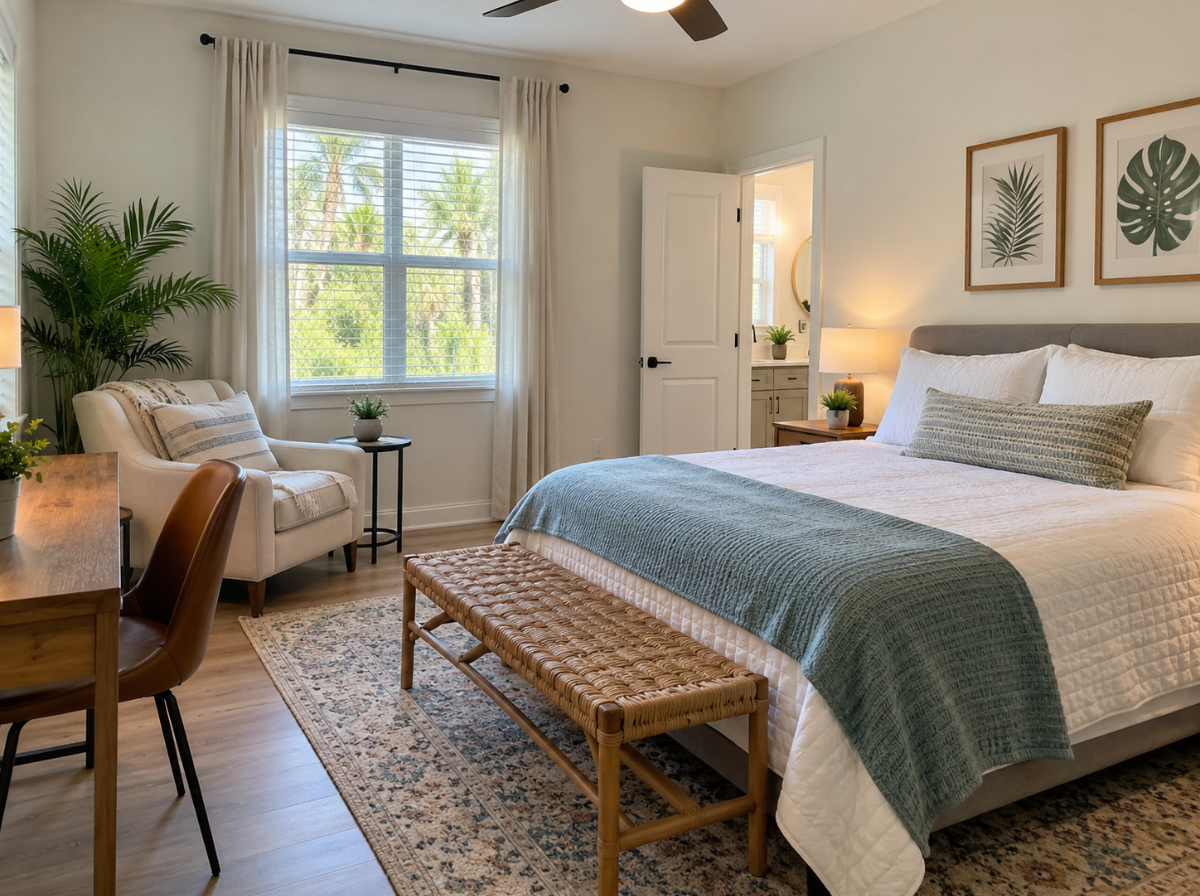
Another version of house hacking is renting a bedroom, guest suite, garage apartment, or other portion of the property while you continue to live there.
This is where the strategy becomes very location-specific.
Inside the City of Orlando, the Home Sharing program covers qualifying rentals of less than 30 days. Among other requirements, the resident must live on-site and be present while hosting guests, only one booking is permitted at a time, and no more than half of the dwelling may be devoted to home sharing. Renting the entire property under the city's Home Sharing rules is not permitted. City of Orlando Home Sharing Registration
In other words, Orlando's rules actually make the traditional house-hacking concept especially relevant because the permitted home-share model is centered on someone continuing to live at the property.
But rules change when you cross jurisdictional lines, and an HOA may impose additional restrictions even when the local government allows a use.
Mid-term rentals introduce another layer.
A buyer may decide that renting a furnished space for 30, 60, or 90 days feels easier than managing weekend guests.
That can be true operationally, but 30 days does not automatically eliminate every tax issue.
Florida's Department of Revenue states that state sales tax generally applies to qualifying rental accommodations for six months or less, subject to exemptions, and local transient-rental taxes can also apply. Florida Department of Revenue rental-accommodation tax guide
The lesson is the same: understand the rules before putting projected rental income into your spreadsheet.
Why House Hacking Can Be Powerful
The biggest advantage is not necessarily cash flow.
It is reducing your personal housing expense while you are acquiring an asset.
Housing is one of the largest monthly expenses most people have. If another unit or rentable portion of the property offsets even part of that expense, the difference can accumulate over several years.
You are also learning how rental property actually works.
Tenant screening sounds simple until you have to do it. Maintenance looks easy on a spreadsheet until the air conditioning stops working. Managing leases, deposits, repairs, turnover, and communication teaches you things that reading about real estate investing cannot.
There is also flexibility.
Someone may start in a duplex, live there for several years, eventually move, and keep the property as a rental. Another homeowner may build an ADU and decide the extra income is enough that they have no interest in acquiring additional properties.
House hacking does not need to become a 20-property portfolio to be worthwhile.
But House Hacking Is Not Free Housing
This is where some of the online content gets unrealistic.
A tenant helping pay the mortgage does not eliminate ownership expenses.
You still need reserves.
You still own the roof, HVAC, plumbing, electrical system, appliances, and structure.
If you own a multifamily property, you may have multiple HVAC systems, multiple kitchens, more plumbing fixtures, and more opportunities for something to need attention.
You also give up some privacy.
Living next door to your tenant is different from owning a rental across town. Renting a room inside your home is even more personal.
That does not make house hacking a bad strategy.
It just means the savings come with a tradeoff.
Do Landlord-Tenant Rules Still Apply?
If you are creating a traditional residential tenancy, being an owner-occupant does not mean you can ignore landlord responsibilities.
Florida's Residential Landlord and Tenant Act covers areas including deposits, maintenance obligations, landlord access, rental agreements, and termination procedures. Florida Residential Landlord and Tenant Act
That is another reason I do not think buyers should treat house hacking as an informal arrangement just because everyone lives on the same property.
You are still combining homeownership with landlording.
Treat both sides seriously.
What Should You Look for in a House Hack?
I would start with the rental strategy before choosing the property.
If you want a duplex, determine realistic rents for the other unit and whether the numbers work after expenses.
If you want an ADU, verify that it already exists legally or determine whether the lot can actually support one.
If you want to rent rooms or operate shorter stays, investigate the local zoning, HOA documents, insurance requirements, taxes, and rental rules before assuming the income is available.
Then ask another question:
Would I still want to own this property if the rental income were lower than expected?
That is a useful stress test.
The strongest house hacks are not properties where everything has to go perfectly.
They are properties where the rental income improves an already reasonable ownership situation.
Frequently Asked Questions About House Hacking in Orlando
Can I house hack a duplex with an FHA loan?
Potentially, yes. FHA financing can be used on eligible one- to four-unit properties when program and borrower requirements are met, and HUD states that qualifying FHA borrowers may have down payments as low as 3.5 percent. The property must also meet the lender's and FHA's applicable requirements.
Can rental income help me qualify for the mortgage?
It can in certain circumstances. Current Fannie Mae guidelines allow qualifying rental income from two- to four-unit principal residences, but the amount and treatment depend on documentation, rental history, property type, and underwriting rules. Do not assume the lender will simply add 100 percent of projected rent to your income.
Can I build an ADU on any Orlando property?
No. ADU eligibility depends on the specific property's zoning, lot size, development standards, and proposed design. Check the property with the City of Orlando or the applicable local jurisdiction before treating future ADU income as part of the investment.
Can I Airbnb a room in my Orlando home?
Possibly, but the City of Orlando has specific Home Sharing requirements. For qualifying stays under 30 days, the resident generally must live on-site and be present while hosting, and only part of the home may be used for home sharing. HOA rules may create additional restrictions.
Do I have to live in the property?
If you are using owner-occupied financing, you need to comply with that loan program's occupancy requirements. Those requirements are not identical across every mortgage, so verify the exact terms with your lender rather than assuming there is one universal timeline.
Is house hacking worth it?
It can be when the property works financially and the living arrangement fits your lifestyle. The benefit is reducing your personal housing expense while building equity, but you are also taking on landlord responsibilities, maintenance risk, and less privacy.
Is House Hacking Right for You?
House hacking is not a shortcut to free housing.
It is a way to make your primary residence work harder financially.
For the right buyer, a duplex, ADU, or rentable portion of a home can reduce monthly housing costs and create a practical first step into real estate investing.
But I would not buy a property simply because someone online says the other unit will “pay your mortgage.”
Verify the rent.
Verify the financing.
Verify the zoning.
Verify the rental restrictions.
And make sure you would still be comfortable owning the property when something eventually does not go according to plan.
That is usually where the difference between a good house hack and an expensive lesson starts.
Categories
Recent Posts









“Making real estate simple, fun and profitable! ”