
Buying a Home With a Pool in Orlando: What the Inspection May Not Tell You

Buying a Home With a Pool in Orlando: What the Inspection May Not Tell You
A pool can be one of the best features of an Orlando home, but it can also be one of the easiest places for a buyer to underestimate future expenses. Imagine finding the backyard you wanted. The pool looks clean, the water is blue, the pump is running, and nothing during the showing immediately raises concern.
Then, after closing, you discover the equipment is older than expected, the pool surface needs attention, the screen enclosure has problems, or the permit history does not match what you thought you were buying. The mistake was not buying a home with a pool. The mistake was assuming that because the pool looked good and was part of the home inspection, you understood everything you were taking on.
I’m Tyler Gibson with the GPG Team, and when I help buyers evaluate homes in Orlando and Central Florida, I encourage them to look at the pool as its own system and improvement, not just part of the backyard. Here are some of the things I would investigate before buying an Orlando home with a pool.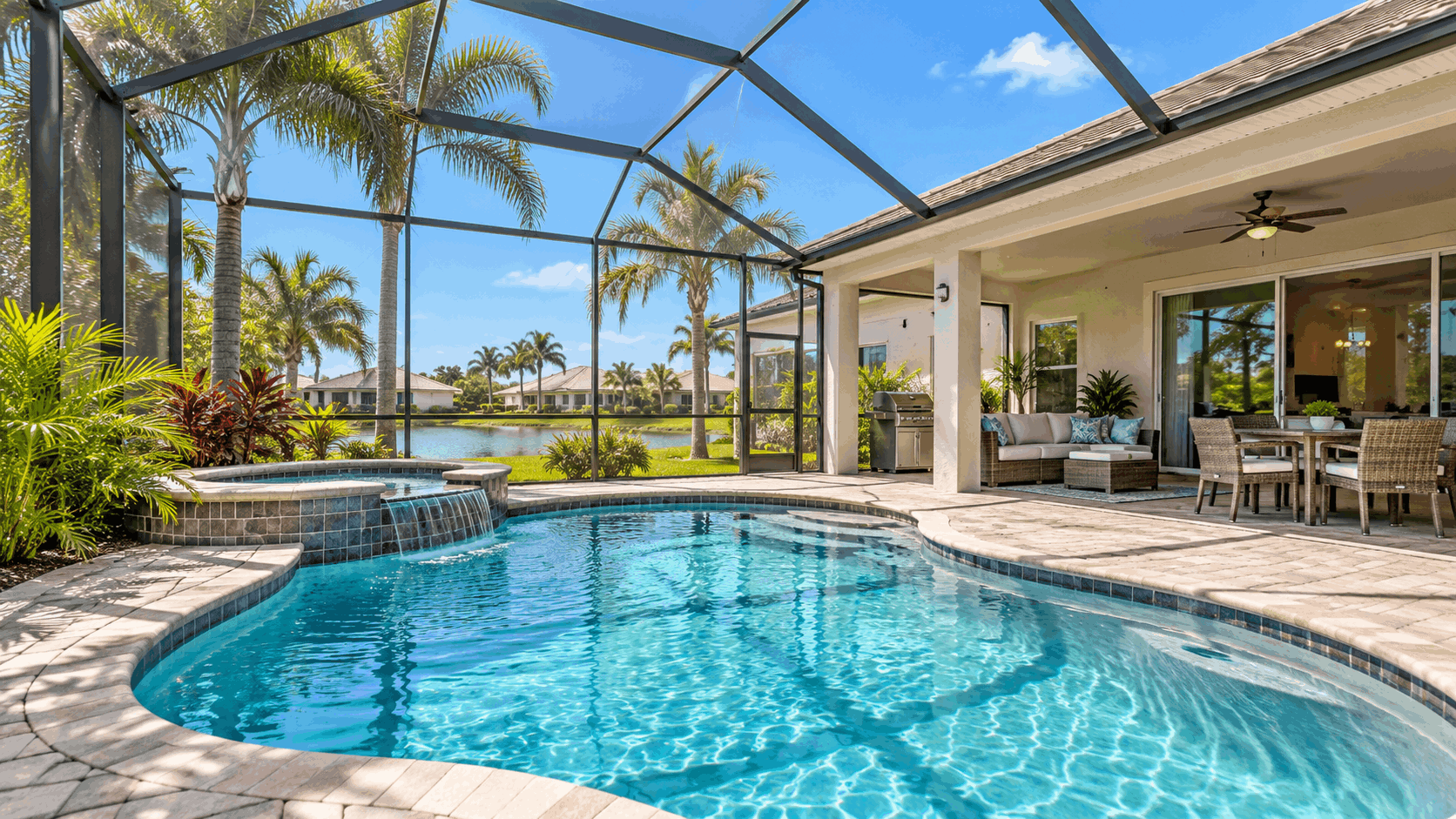
Know What Your Home Inspection Actually Covers
Do not assume a standard home inspection automatically includes a detailed evaluation of every pool component. Florida defines a home inspection as a limited visual examination of readily accessible systems and components of the home, and a swimming pool is not separately identified in that statutory definition.
You can review Florida’s definition of a home inspection through the Florida Statutes.
That does not mean your inspector will ignore the pool. Some inspection companies include certain pool components, while others offer pool inspections separately. The important part is understanding what your specific inspection includes before you are deep into the inspection period.
Ask whether the inspector will evaluate the pump, filter, heater, visible plumbing, electrical components, pool deck, safety features, and screen enclosure. If the pool is older, has more complicated equipment, or shows evidence of previous repairs, it may make sense to have a qualified pool professional perform a more specialized evaluation.
Clear Water Does Not Tell You the Condition of the Equipment
A pool can look great while expensive equipment is getting closer to replacement. Most buyers naturally focus on the water, and if it is clear and blue, the pool feels like it is in good condition.
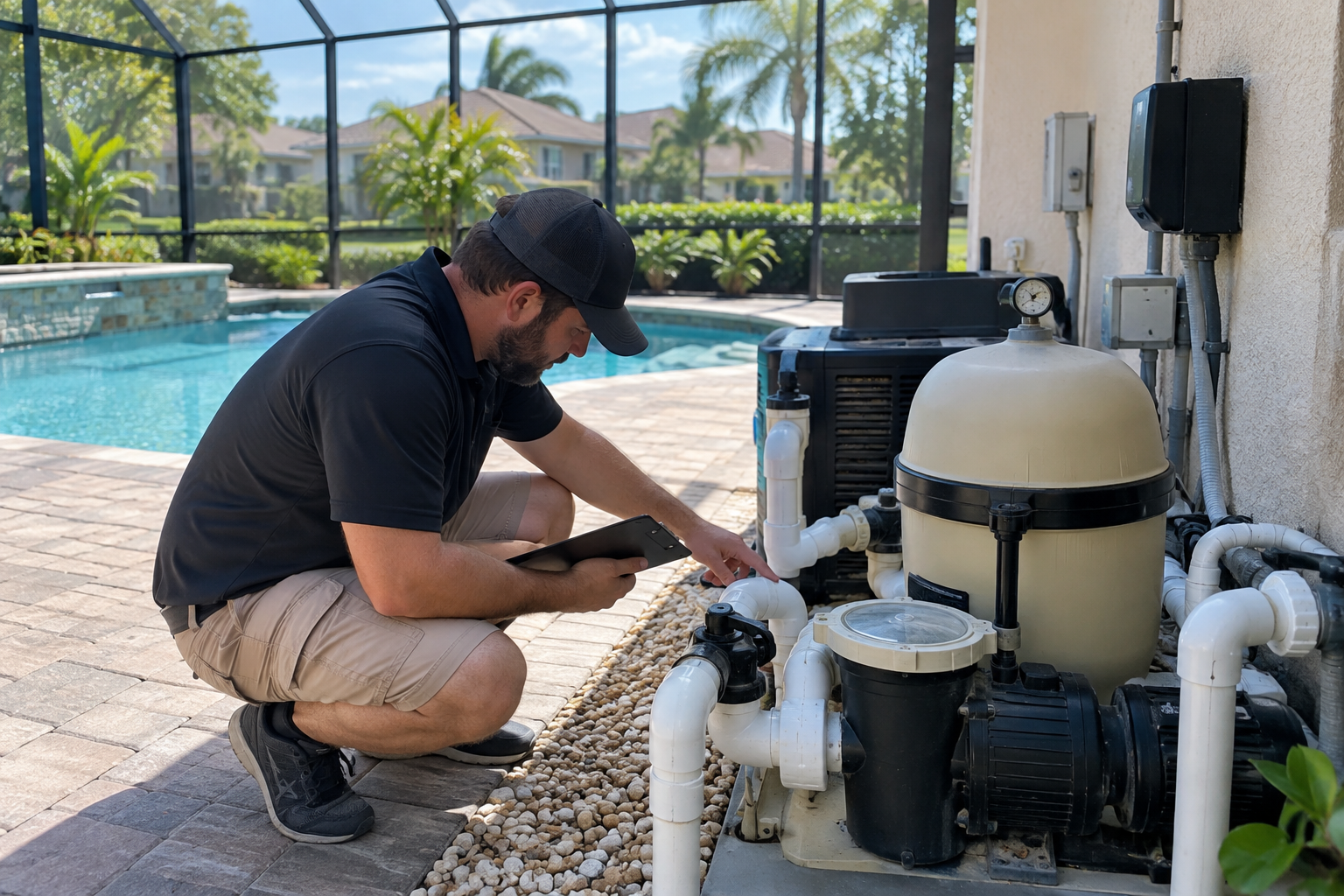
But I also want to understand what is sitting on the equipment pad. Depending on the pool, that may include the pump, filter, heater, salt system, automation controls, valves, and visible plumbing. Ask approximately how old the equipment is and whether the seller has documentation showing replacements, repairs, or regular servicing.
If a listing promotes a pool heater, saltwater system, automated controls, or upgraded lighting, those features are worth evaluating rather than assuming they work because they are installed. Florida law recognizes licensed residential pool and spa contractors as professionals who can repair, service, refinish, and work on pool equipment and related systems. You can review that licensing scope through the Florida Statutes.
If something raises a concern during the general inspection, that may be the point where a pool professional becomes useful.
Take Water Loss and Surface Condition Seriously
Unexplained water loss deserves more attention than simply assuming it is evaporation. Florida heat can cause normal evaporation, so some change in water level is expected. But if someone is regularly adding water to the pool or you notice signs of previous leak repairs, cracking, staining, or equipment problems, I would want to understand why.
The source may involve plumbing, equipment, the pool structure, or another component that is not obvious during a short showing. You also want to look closely at the interior finish. From several feet away, the pool may appear perfectly fine. Up close, you may notice rough surfaces, staining, cracks, tile problems, deterioration, or evidence of previous repairs.
An older pool is not automatically a problem. The question is whether you understand where it is in its maintenance cycle. If the seller says the pool has been resurfaced or significantly renovated, ask when the work was completed and whether documentation is available.
That gives you a much better picture of what you may need to budget for after closing.
Research the Pool and Screen Enclosure Permit History
A pool that has physically existed for years is not proof that every improvement around it was properly permitted and finalized. For properties inside the City of Orlando, residential pools and spas can involve building, electrical, engineering, and other permits depending on the features being installed.
The City of Orlando publishes current requirements in its Residential Swimming Pool and Spa Checklist.
The pool itself may have one construction history while a heater, screen enclosure, electrical upgrade, or later renovation has another. The City of Orlando also identifies pool screen enclosures as requiring separate permitting.
That matters because a visual inspection and permit research answer different questions. The inspection helps you understand observable condition, while the permit record helps you understand what the available construction history shows.
If a pool has been renovated, expanded, enclosed, or upgraded, I would compare what is physically at the property with the permit information that is available. The correct permitting authority also depends on the property’s actual jurisdiction, so a property inside Orlando city limits may need to be researched differently from one in unincorporated Orange County.
Pay Attention to the Screen Enclosure and Survey
The pool cage and the location of the pool on the lot can create their own repair and property-use questions. Screen enclosures are extremely common throughout Central Florida, which makes them easy to overlook during a showing.
Look at the screens, doors, framing, attachment points, and visible condition of the structure. Ask whether it appears original to the pool or whether it may have been added later. A screen enclosure that looks fine from across the pool can still have areas that need repair or eventual replacement.
You also want to pay attention to the survey. The City of Orlando’s pool requirements address issues such as property-line setbacks, utility and drainage easements, decks, equipment locations, and other site considerations.
For a buyer, that means the relationship between the pool, deck, enclosure, property boundaries, and easements can matter. This becomes even more important if you plan to change the backyard later.
Maybe you want to enlarge the deck, replace the enclosure, add an outdoor kitchen, or make another improvement. A backyard can look like it has plenty of available space while setbacks or easements limit what can actually be built.
Check the Pool Safety Features
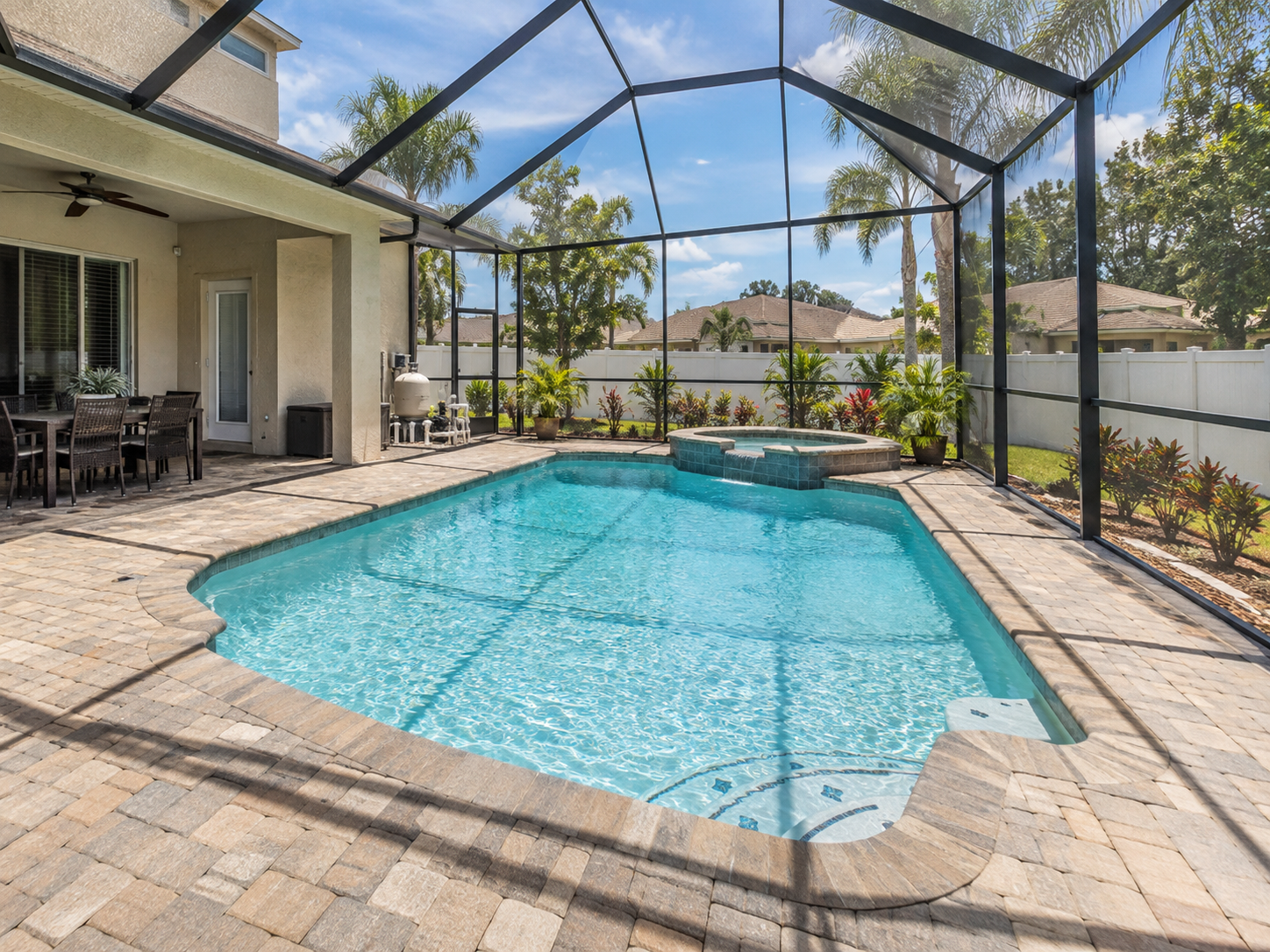
You should understand what pool safety features are already installed and whether they are functioning properly. Pools can use different safety setups, including fences, barriers, door alarms, safety covers, or self-closing and self-latching doors or gates.
Florida’s Residential Swimming Pool Safety Act establishes safety requirements for residential pools. You can review the current provisions in Chapter 515 of the Florida Statutes.
For a buyer, the practical question is simple: what safety features are currently installed, and are they working? That is much easier to determine before closing than after you become responsible for the property.
Talk to Your Insurance Professional Before Closing
Do not assume every homeowners insurance policy handles pools the same way. A pool can create coverage, underwriting, and liability considerations that are worth discussing directly with your insurance professional.
The Florida Department of Financial Services provides consumer information about homeowners insurance and property inspections.
When requesting coverage, tell your insurance professional the home has a pool. If the property also has a spa, heater, diving board, slide, or screen enclosure, mention those features as well. You can also ask how the policy handles personal liability related to the property.
The goal is not to assume the pool will create an insurance problem. The goal is to understand how your actual insurer and policy will treat the property before you own it.
Understand the Pool Before You Fall in Love With the Backyard
There is nothing wrong with wanting a pool home in Orlando. For many buyers, it is one of the reasons they are excited about owning a home in Central Florida.
But I would evaluate the pool with the same mindset I use when looking at the roof, HVAC, electrical system, or plumbing. I want to understand what I am buying.
That means looking beyond whether the water is blue. You want to understand the condition of the equipment, potential water loss, pool surface, permit history, screen enclosure, survey, safety features, and insurance considerations.
A pool that needs some work can still be part of the right home. The problem is discovering those expenses after closing when you could have investigated them beforehand.
Before buying, find out what the general inspection actually includes. Ask whether a specialized pool evaluation is appropriate. Research major renovations and available permit history. Look at the survey and enclosure. Talk to your insurance professional.
A pool should be an amenity you understand, not a surprise you inherit.
Frequently Asked Questions About Buying a Home With a Pool in Orlando
Does a home inspection include the swimming pool?
Not necessarily, so confirm the scope with your inspector before the inspection. Some inspectors evaluate certain pool components, while others offer pool inspections separately or recommend additional evaluation when needed.
Should I get a separate pool inspection before buying a house?
A separate pool evaluation can be worthwhile when the pool is older, has complicated equipment, or raises questions during the general inspection. A qualified pool professional can focus more specifically on the equipment, visible plumbing, surface condition, leaks, and related components.
How do I check whether a pool was permitted in Orlando?
Start with the permitting authority for the property’s actual jurisdiction. For homes within Orlando city limits, the City of Orlando provides information about residential pool permitting and inspections.
Does a pool affect homeowners insurance in Florida?
It can, depending on the property and insurer. Discuss the pool and any related features with your insurance professional before closing so you understand potential coverage, underwriting, and liability considerations.
Does a pool screen enclosure need a permit in Orlando?
Yes, the City of Orlando identifies pool screen enclosures as requiring separate permitting. Buyers considering an existing enclosure can review available permit history to better understand when and how it was constructed.
What should I ask the seller about the pool?
Ask about the pool’s age, resurfacing history, equipment replacements, leaks, previous repairs, heater, and significant renovations. Then verify important details through inspections, permit research, insurance review, and other due diligence.
Thinking About Buying a Pool Home in Orlando?
A pool can be a great part of owning a home in Central Florida, but it deserves more due diligence than checking whether the water is clean and the pump turns on.
If you are considering a home with a pool in Orlando or anywhere in Central Florida, I can help you evaluate the property, identify the questions worth asking, and navigate the due-diligence process before you make the home yours.
Categories
Recent Posts









“Making real estate simple, fun and profitable! ”