
What to Check Before Buying a Rental Property in Orlando

Buying a rental property in Orlando can look simple from the outside. You find a property, estimate the rent, subtract the mortgage, and decide whether the monthly cash flow looks good.
But that is where many investors get into trouble.
A rental property is not a good investment just because the rent is higher than the mortgage. The real numbers include insurance, taxes, repairs, vacancy, management, HOA fees, utilities, lawn care, capital expenses, financing, reserves, and the rules that control how the property can actually be used.
In Orlando and Central Florida, those details matter. A home near Disney may not work as a short-term rental. A condo with a strong rent estimate may have an HOA rule that limits leasing. A house with good projected cash flow may need a roof, have high insurance costs, or sit in a location where tenant demand is not as strong as it first appears.
I’m Tyler Gibson with the GPG Team. I work with buyers, sellers, and investors in Orlando and Central Florida, and one thing I tell investors all the time is this: do not fall in love with the property before you understand the numbers.
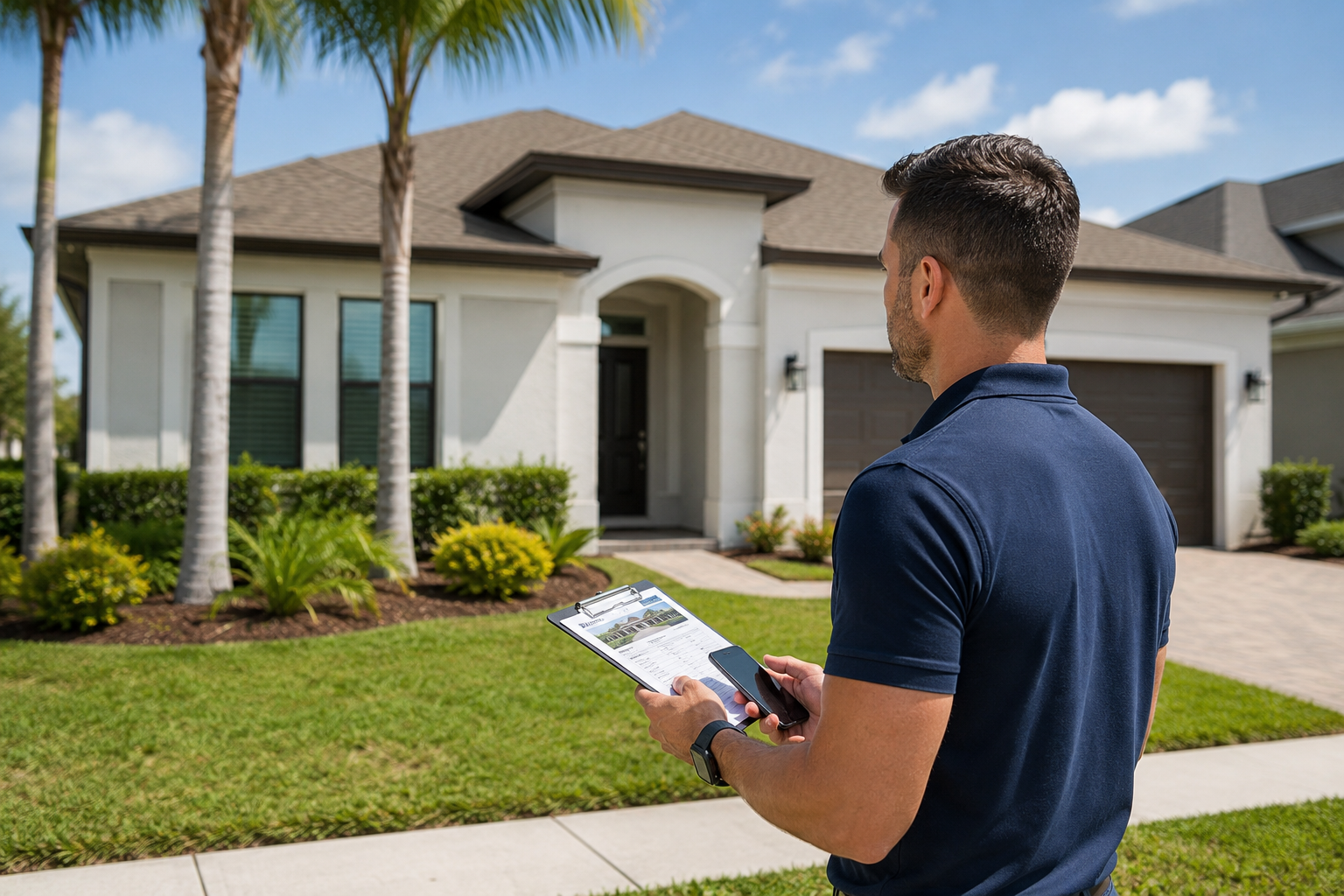
What should you check before buying a rental property in Orlando?
Before buying a rental property in Orlando, investors should evaluate the real rent potential, total monthly expenses, insurance costs, property taxes, HOA rules, rental restrictions, property condition, financing terms, tenant demand, management plan, and exit strategy.
The mistake is looking at only one number.
Rent matters, but rent alone does not make a deal. A property can rent well and still perform poorly if expenses are too high. A property can look cheap and still become expensive if it needs major repairs. A property can look perfect online and still fail because the HOA does not allow the rental strategy you planned to use.
The best investors slow down before they buy. They verify the numbers, test the assumptions, and look for problems before those problems become expensive.
How do you know if the rent estimate is realistic?
The first number most investors look at is rent. That makes sense, but the rent number needs to be real.
Online rent estimates can be helpful as a starting point, but they should not be the only source you use to make a purchase decision. Investors should compare the property against real rental comps in the same area, with similar size, condition, bedroom count, property type, features, and lease structure.
A three-bedroom home in one Orlando neighborhood may rent very differently from a similar-looking three-bedroom home ten minutes away. School zones, commute routes, condition, parking, yard space, updates, neighborhood feel, and proximity to employment centers can all affect demand.
The question is not, “What could this rent for in a perfect scenario?” The better question is, “What would a realistic tenant pay for this property in its current condition?”
If you overestimate rent by even a few hundred dollars a month, the deal can go from profitable to tight very quickly. The Orlando Regional REALTOR® Association market reports can help investors understand broader local market activity, inventory, pricing, and days on market. That information does not replace rental comps, but it can help you understand the overall market environment before making a decision.
The full monthly cost matters more than the mortgage
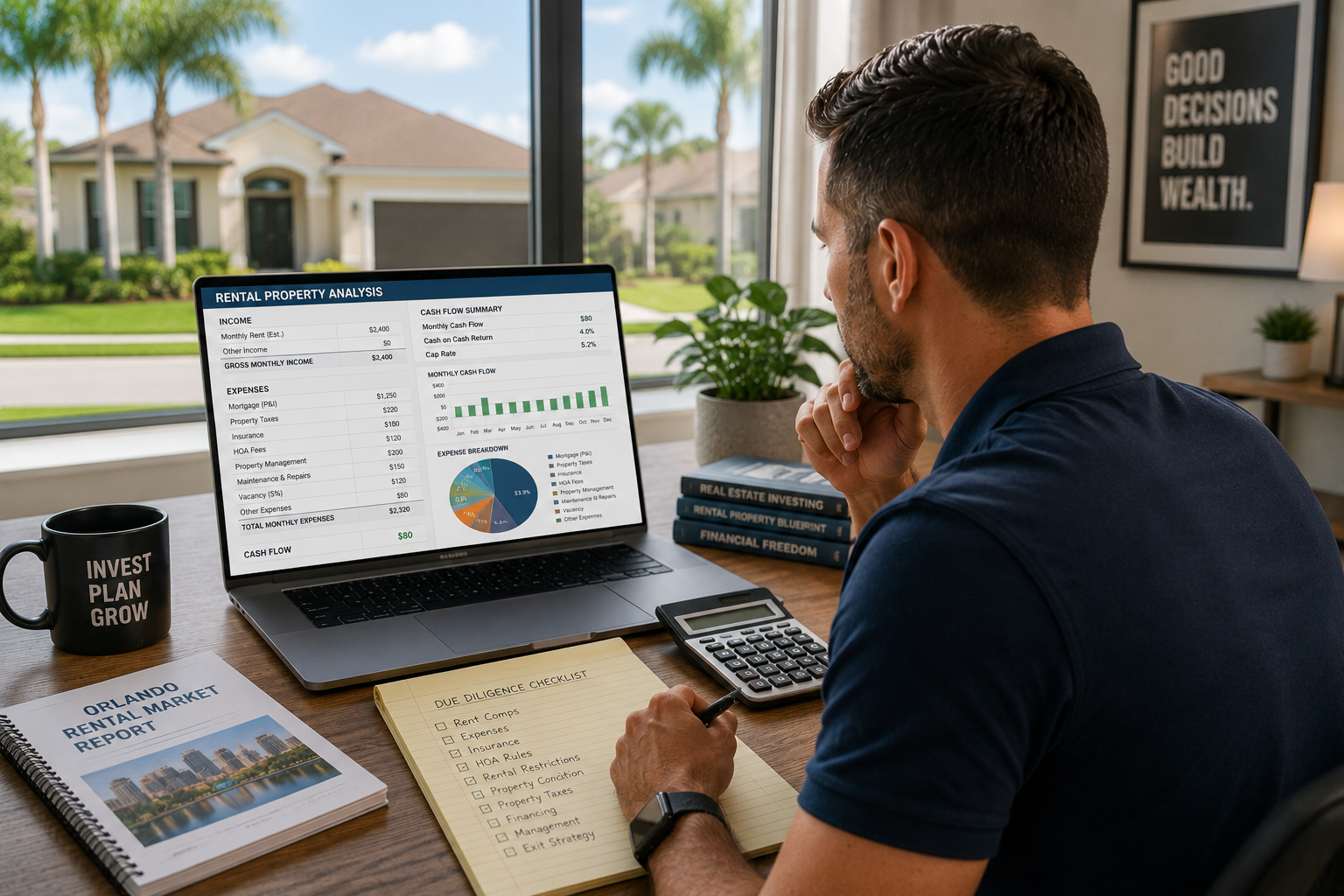
A rental property analysis should include more than principal and interest. Investors need to look at the full monthly cost of ownership.
That means the mortgage payment, property taxes, insurance, HOA dues, property management, vacancy, repairs, maintenance, lawn care, pest control, utilities if applicable, leasing costs, and capital expense reserves. This is where many investors become too optimistic. They calculate the rent, subtract the mortgage, and assume the rest is cash flow.
That is not underwriting. That is guessing.
Florida rental property expenses can vary widely, especially because insurance and taxes can change the numbers. A property that looks strong before insurance quotes may look very different after you confirm the actual premium.
The IRS explains in Publication 527, Residential Rental Property, that rental owners generally report rental income and may deduct certain rental expenses, while repairs, improvements, and depreciation may be treated differently for tax purposes. The IRS also provides guidance on rental income, deductions, and recordkeeping, which is a good reminder that investors need organized records from the beginning.
The goal is not to make the deal look good. The goal is to find out whether it actually is good.
Why does insurance matter so much for Orlando rental properties?
Insurance can change the entire rental analysis in Florida. Before buying a rental property in Orlando, investors should get real insurance quotes early.
Do not use a rough guess. Do not copy what the current owner pays without asking questions. Do not assume your primary residence insurance experience will match an investment property.
Insurance can be affected by roof age, electrical systems, plumbing, location, claims history, flood risk, wind mitigation features, property use, short-term rental use, vacancy, and whether the property is tenant-occupied. This is especially important for older homes.
A property may look affordable until the insurance quote comes back higher than expected or the carrier requires updates before issuing coverage. The Florida Office of Insurance Regulation provides wind mitigation resources, and the Florida Department of Financial Services explains mitigation notices, inspections, and forms for Florida property owners.
For investors, insurance is not a detail to check later. It is one of the first numbers to confirm.
Property condition can change the entire deal
Condition matters because repairs affect both cash flow and risk. A rental property does not need to be perfect, but investors need to know what they are buying.
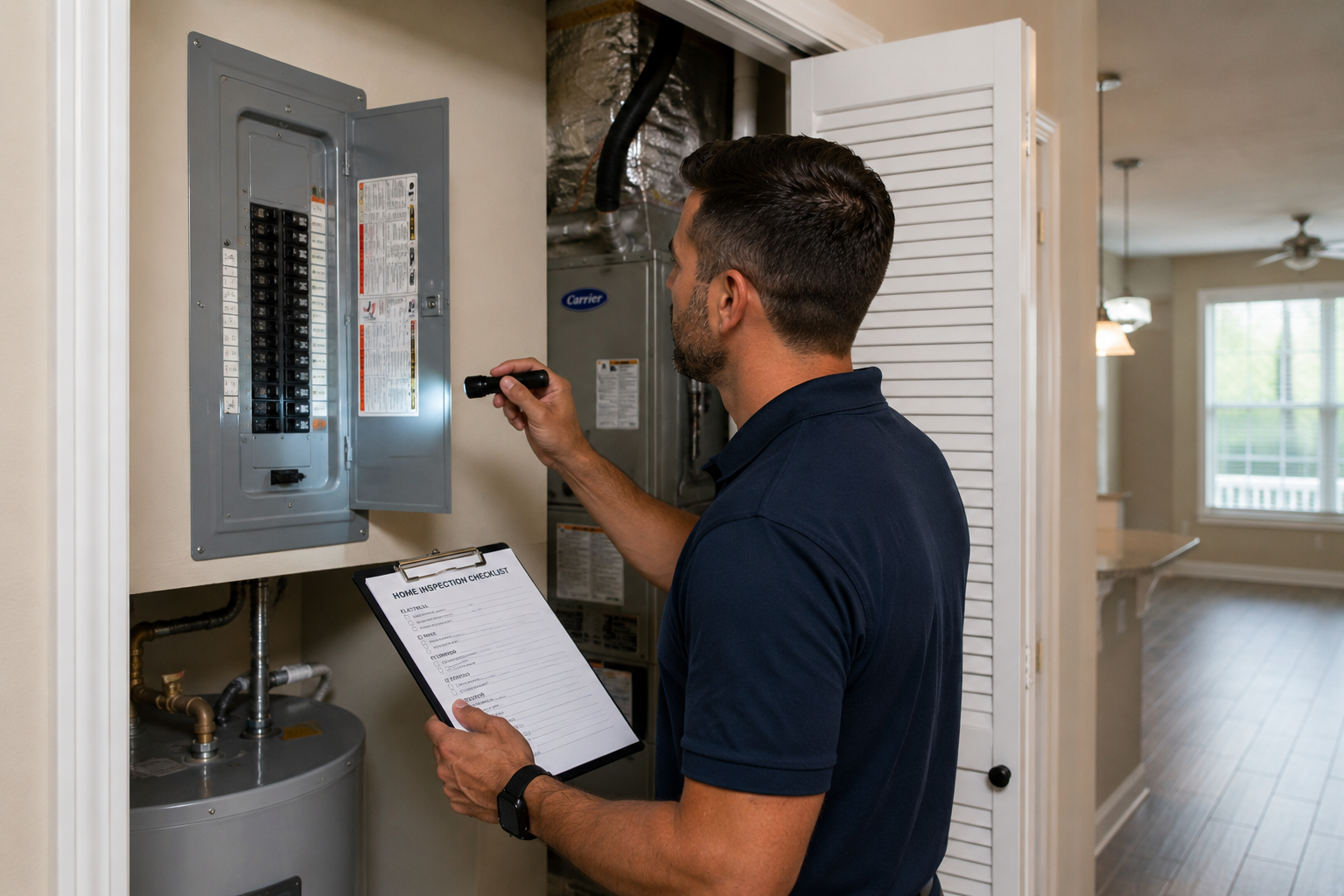
The roof, HVAC system, plumbing, electrical panel, water heater, windows, drainage, appliances, flooring, and exterior condition all matter. A property that needs cosmetic work is different from a property that needs major systems replaced. Cosmetic work can often be planned. Major systems can wipe out cash reserves.
That does not mean you should automatically avoid older homes. It means you should understand what the property needs and price the risk into the deal.
A home inspection is useful, but investors should also think like operators. Ask what will need attention in the first year. Ask what could break while a tenant is living there. Ask what may affect insurance, tenant satisfaction, and future resale.
A cheap property with expensive deferred maintenance may not be cheap.
HOA rules can make or break the rental strategy
HOA rules can make or break a rental property. Before buying, investors should review the HOA documents, rental rules, approval process, lease minimums, rental caps, tenant screening requirements, pet rules, parking rules, and any short-term rental restrictions.
Do not rely only on the listing. Do not rely only on what a seller says. Read the documents.
Some communities allow long-term rentals but restrict short-term rentals. Some require tenant approval. Some have minimum lease periods. Some limit the number of rental homes in the community. Some have waiting lists before an owner can lease.
Florida Statute 720.401 requires a disclosure summary for prospective buyers in homeowners’ association communities before executing the contract for sale. Florida Realtors also advises buyers and agents to pay attention to HOA rules and governing documents during the transaction in their article on navigating HOA rules.
If the rental strategy depends on flexibility, the HOA documents need to support that strategy.
Can you use an Orlando rental property as an Airbnb?
Orlando attracts a lot of investor interest because of tourism, Disney, Universal, conventions, and year-round travel demand. But that does not mean every Orlando property can be used as a short-term rental.
This is one of the biggest mistakes investors make. They see “near Disney” and assume it works as an Airbnb.
That is not enough.
Short-term rental rules can depend on city, county, zoning, HOA restrictions, property type, licensing, registration, and whether the owner lives on site. The City of Orlando’s short-term rental fact sheet explains that an individual homeowner may not rent the entire home under the city’s home sharing law for 1 to 29 days, while qualifying home sharing can apply when the homeowner lives on site and rents part of the home. The City of Orlando also provides a Home Sharing Registration page with registration information.
Orange County’s Zoning Division guidance says short-term rental is permitted only in certain zoning districts where short-term rental is expressly permitted. It also notes that single-family transient rental, defined as less than 30 days, is permitted only in the R-3 district.
For investors, this is not a small detail. If the business plan depends on nightly or weekly rental income, you need to verify the rules before you buy.
How will property taxes change after purchase?
Property taxes can change after a purchase, and investors should not assume the current owner’s tax bill will be their future tax bill.
In Florida, homestead exemptions and Save Our Homes protections may reduce the current owner’s taxable value if the property is their primary residence. When an investor buys the property as a rental, the tax situation may change.
The Florida Department of Revenue explains that the homestead exemption and Save Our Homes assessment limitation help qualifying homeowners save money on property taxes, but those benefits are tied to homestead status. Their page on property tax exemptions is a helpful starting point for understanding that difference. The Orange County Property Appraiser also provides a tax estimator, which can help buyers estimate property taxes when planning a purchase.
This is especially important when a property has been owned for a long time or was owner-occupied. A low current tax bill can make the deal look better than it will actually perform after reassessment.
Financing, reserves, and management all affect risk
Financing affects returns. The interest rate, down payment, loan type, lender fees, insurance requirements, debt service, and reserve requirements all affect the investment. A property that cash flows with one loan structure may not work with another, which is why investors should analyze the property based on their actual financing.
Reserves also matter. A rental property needs cash set aside for repairs, vacancy, turnover, deductibles, appliance replacement, and unexpected issues. If the deal only works when everything goes perfectly, it may not be a strong deal. Vacancy happens. Repairs happen. Tenants move out. Insurance changes. Good investors plan for those things before they buy.
Management should be part of the analysis too. Rental properties are not automatically passive. Someone has to market the property, screen tenants, collect rent, handle maintenance, respond to issues, manage renewals, document condition, and deal with problems when they happen.
If you plan to self-manage, be honest about your time, availability, systems, and comfort level with landlord responsibilities. If you plan to hire a property manager, include the management fee in your numbers from the beginning.
Florida residential landlords should also understand their obligations under Florida’s landlord and tenant laws. Chapter 83, Part II of the Florida Statutes covers residential tenancies, including items such as security deposits, landlord obligations, tenant obligations, access, termination, and remedies. You can review Florida Statutes Chapter 83, Part II for the legal framework, and speak with a Florida attorney for legal advice.
Tenant demand and exit strategy should be clear before you buy
A rental property is only useful if qualified tenants want to live there. Before buying, investors should study tenant demand in the neighborhood.
Look at nearby rentals, days on market, rent reductions, employment access, commute routes, schools, shopping, parking, safety perception, and property condition compared to other rentals. A home can be a good deal on paper but difficult to rent if the location does not match what tenants want.
Investors should also think through the exit strategy before buying. Maybe the plan is long-term rental income. Maybe it is a future resale. Maybe it is house hacking. Maybe it is turning the property into a short-term rental if allowed. Whatever the plan is, ask what happens if the first plan does not work.
Can the property still work as a long-term rental if short-term rental rules change? Can it sell to an owner-occupant later? Can it support a property manager? Can you afford to hold it if rent comes in lower than expected?
A property with only one way to win is riskier than a property with multiple options.
Conclusion: the numbers have to survive reality
Buying a rental property in Orlando can be a smart move, but only if the numbers survive reality.
Do not rely on one rent estimate. Do not ignore insurance. Do not skip HOA documents. Do not assume short-term rentals are allowed. Do not forget property taxes, repairs, reserves, management, or vacancy.
A good rental property is not just a property that looks good online. It is a property that still makes sense after you check the real rent, real expenses, real restrictions, real condition, and real risks.
If you are thinking about buying a rental property in Orlando or Central Florida, Tyler Gibson and the GPG Team can help you look beyond the listing and evaluate the deal before you move forward.
Call the GPG Team at (407) 934-0320 to talk through your rental property strategy before you buy.
Frequently Asked Questions
What should I check before buying a rental property in Orlando?
Before buying a rental property in Orlando, check realistic rent comps, total monthly expenses, insurance quotes, taxes, HOA rules, rental restrictions, property condition, financing terms, tenant demand, management costs, and exit strategy.
Is Orlando a good place to buy a rental property?
Orlando can be a strong rental market because of tourism, jobs, universities, and relocation demand, but not every property is a good investment. The deal still needs to be evaluated based on real numbers, location, condition, rules, and expenses.
Can I use an Orlando rental property as an Airbnb?
Not always. Short-term rental rules depend on the city, county, zoning, HOA restrictions, property type, licensing, registration, and whether the owner lives on site. Always verify the rules before buying.
What expenses should investors include in rental property analysis?
Investors should include mortgage, taxes, insurance, HOA dues, property management, vacancy, repairs, maintenance, lawn care, pest control, utilities if applicable, capital expense reserves, and leasing costs.
Why do HOA rules matter for rental properties?
HOA rules matter because they can limit leasing, restrict short-term rentals, require tenant approval, set minimum lease terms, regulate parking and pets, and create fines or violations if the property is not managed properly.
Categories
Recent Posts









“Making real estate simple, fun and profitable! ”